Sound Bites - Cathy Weseluck

How did you get started in voice-acting?
I was working on a radio show for CBC Vancouver ("Disc Drive") as an Associte Producer- this is back in '86-'88- when I got an offer by the host of the show to come and do some silly voices for CHQM, a local radio station. I had to do twenty-one commercials for them. They weren't asking for "straight reads," but something more on the silly and different side of things. So, I threw in a myriad of half-baked characters that seemed to live in me into these commercials, and that was the beginning. Jurgan Gothe, the host of the show, had heard enough of my voices just by working with me around the office (these things just come out, you know...) and thought they'd be great to accent some of the commercials he was writing for the station. Anyway, after two years at the CBC, I quit my job to try this voice-thing/acting-thing out, and... presto! I was lucky too, because the animation industry was just stating to "spill up" from L.A. Other than Jurgen, I have to give credit to my gerbils Whiskers and Nibbles, my furry childhood friends. When I was eight, I believed that if I talked in this cutesy little chipmunk-like voice, they'd be able to understand me better. Now that character voice is used for a potpourri of voice effects and baby/chipmunk-like characters in some of the animation episodes I've preformed in. My gerbils were buried in our backyard behind the lilac bush and I can't thank them enough for contributing to my career!
Do you do anything special to prepare yourself for a role? Like research of any kind?
Yes, I always prepare, and how depends on what type of character I'm asked to read for. If I'm asked to do a mimic-type thing, a pseudo-Rosie Perez, or Julie Newmar or something specific, I'll rent out a video and get the voice down pat. But it's difficult when we don't have pictures of the characters to work with, or much information- that's when your "on-the-spot" flexibility and acting skills have to come into play, when you have to give them what they want on the spot. Also, the director may have new information that you didn't have before the audition or may ask you to read something you've never looked at. So being able to take direction is a must. Plus, if we're required to "match" the lip-synch accurately, there's no way that can be practiced ahead of time. You almost have to have the knack. I'll usually come up with a couple of ideas per charactere, record them for myself at home, play them back and critique them. I just pop into casting director mode (I used to do casting) and can usually hear when I'm off and when I'm on the mark. But then, that's just my opinion. The client may be wanting something else and we can never really know if we've given them the right choice. Finally, getting someone else to listen to your voices is helpful because they can tell you from a layman's point-of-view if it sounds like what you're after. The average person is usually the best judge.
When doing a character translated from the Japanese, do you want to hear the Japanese, to see how that voice-actor handled the part?
Yes, I prefer to hear the original Japanese version, if the client wants us to match the sound and/or the energy of the original characters. Plus if you have a little of the original track in your headphones you can hear where the lip synch has to fit to a tee. For me, it helps me to be just that much more accurate. But
toomuch of the original track can be distracting, too. It isn't so much to know what the Japanese actor did with the acting, it's to help me technically, to try and sync better.
Is there much room for improvisation in your voice-acting roles, or are you held pretty much strictly to the script?
We're held pretty much strictly to the script, almost verbatim! The only time we're able to make changes is when the original script was written in the format of another English-speaking country that has phrases and sayings that are only heard in that country. For example, if the script was written by a British person, there may be a few slang phrases they'd throw into the script for the character to say. A North American audience many not understand the lingo, so we'll change it to be as clear to the real meaning as the writer intended as possible, in a standard North American sort of way. Other than that, unless an actor comes up with a really funny phrase or witty comment, no, we're stuck to the script. In early days of A.D.R (Auto-Digital Recording or Automatic Dialog Replacement), the actors were helping to rewrite as they went because the lip-synch didn't always match and the schedules were tight, but that doesn't happen anymore. Nowadays, the translators work very hard to make sure things are accurate and ready on time.
Do you ever watch the animation you're in?
Sometimes. I usually watch shows to see if I can find a nice snippet of a new character I've created to tape and put on a future demo cassette. Of course I'll watch just to see what the animation turned out like and how we all worked together as a group. There's a great sense of accomplishment in seeing the finished version. But no, I certainly don't watch every show. Often the shows we do aren't seen in North America or are on a CD-ROM or video format, so in those cases, it's tougher to get hold of.
[1]
Did you watch animation before you got into voice-acting?
On occasion, but I can't say there was any one cartoon that was my favorite. When I was younger, yes!! Bugs Bunny to me is cartooning at its finest! When I was starting out as a voice-actor I'd watch quite a few- it often served as a way to get informed about the medium. Animation was new to Vancouver in 1988, so we all had to learn and apply as we went. We all just dove in headfirst and discoveered the water was fine!
Do you have a "type" of character that you're usually cast for? Like a tough girl or something like that?
Yes, I have a few types, thankfully, that I'm cast for. Often it's the cartoony types although I am also cast for the straight action-heroine thing too. My cute talking-animals (generic) are popular as well as authentic-sounding young boys. I do a lot of principal looping for
Highlander,
Madison, and
Lonesome Dove too, where an authentic "boy" sound is a specialty. But as I say, in cartoon land, I'll also play the female cop or action babe... I guess Momma's girls and teachers too.
[2]
Do you have a favorite character that you've played?
One of my favorite characters is the voice I used for "Pip Penguin" in Von Hahn Films series
Little Island. He's a wise-crackin' nuisance and provides comedy for the show. He's whining all the time, is cute as a bug and pokes his nose into everybody's business. Also, recently I played a fat fish market woman called "Bertha" for a series and I quite like the challenge she presents! She sounds in the ball park of a "Ma Bell" character. I hear the client asked the director if Cathy Weseluck was a "big girl"- I guess the character sounded fat enough for them! But it's hard to pinpoint a
favorite character... they're all pretty much family by now!
What's the strangest role you've ever played as a voice-actor?
The strangest role I've ever played is a drain pipe. I know, I know, weird... but it was actually very, very, brief... just a lot of spurting noises. I'm also one of the cute little aliens for the Fox Kids' Network commercial bumpers. But really
none of the characters are strange because they're all part of cartoon land!
Do you also do live-action work?
Yes, but not as much as voice-over. I've been on
The Commish,
M.A.N.T.I.S,
Scene of the Crime, and the odd TV movie, such as ABC's
The Halfback of Notre Dame. I also do a lot of on-camera industrial work. I enjoy it, and I'd love to do more, but voice-over has been my "thing".
How does voice-acting compare to live-action work?
Live-action work requires memory, of course, and being on camera. The audition process is totally different- with voice you audition alone whereas on camera you're reacting and working with another person or the casting director. With a pre-lay cartoon series, when you've got the job, you're pretty much in and out in three hours... with television you can be hanging around for hours even if you only have one paragraph to perform. There's a lot of waiting around in TV acting... with voice you're in and out.
Do you ever get fan mail?
I've gotten fan phone calls! One Sunday evening, a fan calld me up at home. He was very pleasant and crazy about "
Shampoo," so it was fine, but even though I appreciate the feedback, believe me, I cetainly wasn't expecting a house call especially on a Sunday evening! It's wonderful to hear from fans, but privacy is also important. If people want to contact me, they should write via my agency. I get letters too, many regading my voice-over workshops. I've taught voice-over (animation and commercial) for over five years now and often get thank-you notes and wonderful feedback... teaching is something I very much enjoy. Besides that, I'll run into people on the street that I don't know, or other actors or production types who'll compliment me on a show I'd done that I'd forgotten about. It's nice to know people are watching and listening and enjoy what we do. And we enjoy it! That's why we're out theree, for fun and for the audience!
Fan mail for Cathy Weseluck can be sent to:
The Characters Talent Agency
1505 2nd Ave., 2nd Floor
Vancouver, B.C., Canada V6H 3Y4
For info on her voice-actor workshops, send a fax to:
Cathy Weseluck's Voice-Over Workshop, (604) 687-4033
Footnotes
- [1] Because of the slow pace of anime releases in the 1990s, Ranma 1/2 had a very lengthy release schedule. The English dub was first released in 1993 and concluded in November 2003. After the conclusion of the recording the cast held a farewell party which was recorded and can be viewed here along with photos from the party here. Despite the final English dubbed episodes being released in November 2003, the series had concluded recording two years earlier. Their wrap party was held on September 11, 2001.
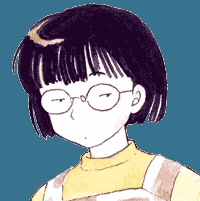
- [2] Weseluck became well known for her high-pitched characters as well including Shampoo and Azusa Shiratori from Ranma 1/2 and C-ko Kotobuki from Project A-ko. Her male voice roles include the Ocean Group dub of Dragon Ball Z where she played Trunks and Near in Death Note. She also played noted roles in various Gundam anime including Mirai Yashima in Mobile Suit Gundam and Dorothy Catalonia in Mobile Suit Gundam Wing. Inuyasha fans will know her as Mrs. Higurashi and Urasue.